SOFTWARE LICENSING SOLUTIONS & SERVICES
Adopt New Monetization Models with Flexible Software Licensing
Grow recurring revenue, protect IP, and accelerate time-to-market with secure, centralized software licensing and enforcement technology.
Revenera Software Licensing Solutions
Launch new business models, manage compliance, and reduce the risk of revenue leakage with a unified framework to support current and future software licensing strategies.
With experience in protecting $40 billion in annual software revenue, Revenera provides scalable, state-of-the-art software licensing solutions for global technology companies, enabling flexible product configurations across on-premises, SaaS, and hybrid deployments.
FlexNet Licensing can empower you to introduce new pricing models – such as metered, pay-per-use, or device-based licensing – while streamlining back-office operations with a centralized system that functions across all product lines, ensuring a consistent customer experience with instant delivery, secure activation, and automated updates.
$40B
annual licensing revenue protected
71M
software licenses delivered
40M
devices supported
Protect Your License Revenue
See how Advantest grows recurring revenue with Revenera’s software licensing solutions.
WHAT CAN REVENERA SOFTWARE LICENSING SOLUTIONS DO?
- Help you grow market share, prevent revenue loss, and monetize more effectively.
- Accelerate time-to-market for new product releases and updates.
- Facilitate IoT device monetization.
- Manage customer license compliance.
- Enable secure activation mechanisms for software and devices, with optional self-service activation
- Support multiple software monetization models on all platforms.
- Allow flexible software packaging, bundling and feature monetization.
- Enable usage-based pricing
- Safeguard your applications against hacking, tampering and piracy.
- Protect and monetize in virtualized and containerized environments.
- Streamline operations with a consolidated platform that accelerates the quote-to-cash process for entitlement and license lifecycle management.
FLEXNET SOFTWARE LICENSING SOLUTIONS
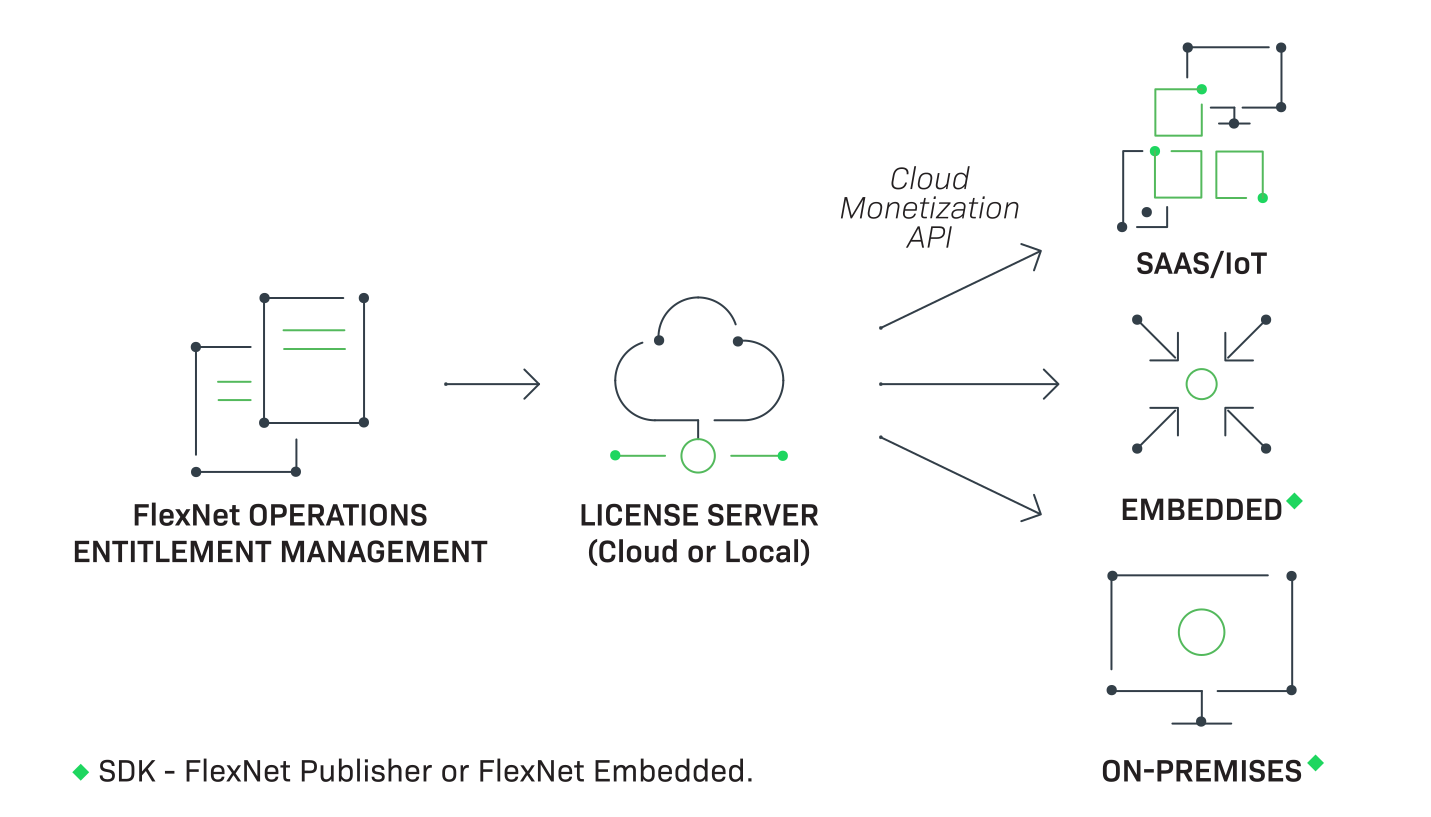
FlexNet software licensing solutions enable monetization across all environments.
ADVANCED SOFTWARE LICENSING TECHNOLOGY
FlexNet Embedded
Benefit from Revenera’s flexible software licensing solutions with support for all platforms and monetization models. FlexNet Embedded is a small footprint SDK that works with software applications – on-premises, cloud, virtualized or mobile – as well as with embedded software on devices.
- Implement all modern monetization models out-of-the-box for packaged, embedded and cloud software.
- Provide in-product and volume license activation support.
- Protect software with tamper-resistant application technology (code obfuscation and sophisticated identification of unauthorized use).
- Broad platform support for a wide range of operating systems, including embedded and mobile.
- Detect virtual machine cloning and manage compliance according to your policies.
- Detect if your applications are running in Docker containers, and support concurrent and consumption-based licensing models in container environments.
FlexNet Publisher
FlexNet Publisher (formerly FlexLM) is the de facto standard in software licensing solutions, used by thousands of publishers to license and protect their applications. It supports a variety of software monetization models, captures usage, and offers advanced protection like tamper-resistance.
- Manage all license models out-of-the-box, including pay-for-overage support.
- Provide efficient in-product and volume license activation support.
- Prevent unauthorized copying and piracy.
- Support flexible machine fingerprinting.
- Support a wide variety of platforms including all major operating systems and virtualization technologies.
Cloud Monetization API
The Cloud Monetization API provides access to FlexNet Embedded capabilities in use cases where an SDK is not the preferred implementation:
- Small-footprint IoT devices that can’t accommodate an SDK and already use JSON/REST for other functions
- Security requirements that restrict the use of third-party software on a device
- SaaS implementations where the underlying hardware is trusted and on-device security is not required
- Quick deployment implementations prior to migrating to FlexNet Embedded SDKs with trusted storage
- Situations requiring control on cryptographic libraries for regulatory reasons, such as FIPS compliance.
For these implementations, the Cloud Monetization API provides a standard web services framework to connect your application to FlexNet Operations.
FlexNet ID Dongle
Today’s state-of-the-art software-based licensing is the choice for most suppliers, offering more flexibility than any hardware-based approach.
However, dongles are still a solution for some use cases, providing software protection by limiting or locking software access to your system.
The FlexNet ID dongle works in conjunction with FlexNet Licensing (FlexNet Embedded or FlexNet Publisher) to enhance security as a form of hostid.
The dongle is a serialized hardware key that attaches to a parallel or USB port and is automatically supported as a valid hostid by any FlexNet Licensing-enabled application.
Revenera offered the out-of-the-box solutions and integrations we needed to support our business model. The transition from a hardware to software model was a learning process and we looked to Revenera for best practices. We’re benefiting from its experience in the industry as we continue to grow our business and do more with its software monetization platform.
TAPAN MOHANTI VP OPERATIONS & MANUFACTURING, TERADICI
BENEFITS OF PURPOSE-BUILT SOFTWARE LICENSING SOLUTIONS
Compared to homegrown systems, purpose-built software licensing solutions reduce your exposure to security vulnerabilities and stop you accumulating technical debt – effectively outsourcing your liabilities so you can focus on customer-facing product development.
On average, software suppliers achieve the following results with FlexNet Licensing:
- 1-3% increase in renewal rates
- 1-5% savings due to automated software delivery and updates
- 2-5% improvement in channel performance via shared access to data
- 5-15% recovery in lost revenue (intentional and unintentional overuse)
- 1-3% savings in support tickets, with fewer escalations related to licensing
Revenera’s software licensing experts have decades of industry experience and are happy to share practical advice, so please get in touch if you’d like to learn more.
With Revenera, our development team could not have imagined working with a better partner; their support and resources exceeded expectations. The new F9 licensing solution was a real team effort and our success is mutual.
JENNIFER HARRIS DEVELOPMENT MANAGER, INFOR F9
As a lean software company trying to best leverage every single resource, we could not afford to have our core engineering talent work on recreating a software licensing solution. We were easily able to conclude that Revenera was going to be a good, trusted partner.
RICHARD JENNY DIRECTOR OF PROGRAM MANAGEMENT AND DEV-OPS, ADVA OPTICAL NETWORKING